
A buyer walks through your home, asks a few questions, and leaves. You hear that they liked it. Then no offer arrives. It is natural to wonder which other house they chose. Sometimes, they chose to stay where they are.
A buyer can appreciate a home and still hesitate over the payment, the work it needs, or the timing of a move. Economic news and election headlines can add to that uncertainty. For an Ashland homeowner preparing to sell, the practical question becomes: what would help someone feel confident choosing this home?
Start with what Ashland actually shows
Our September Market Intelligence report recorded 36 closed single-family sales in Ashland, compared with 22 in September a year earlier. Median time on market was 40 days. Buyers were completing purchases, and the month’s sales activity was stronger than a year before. 1
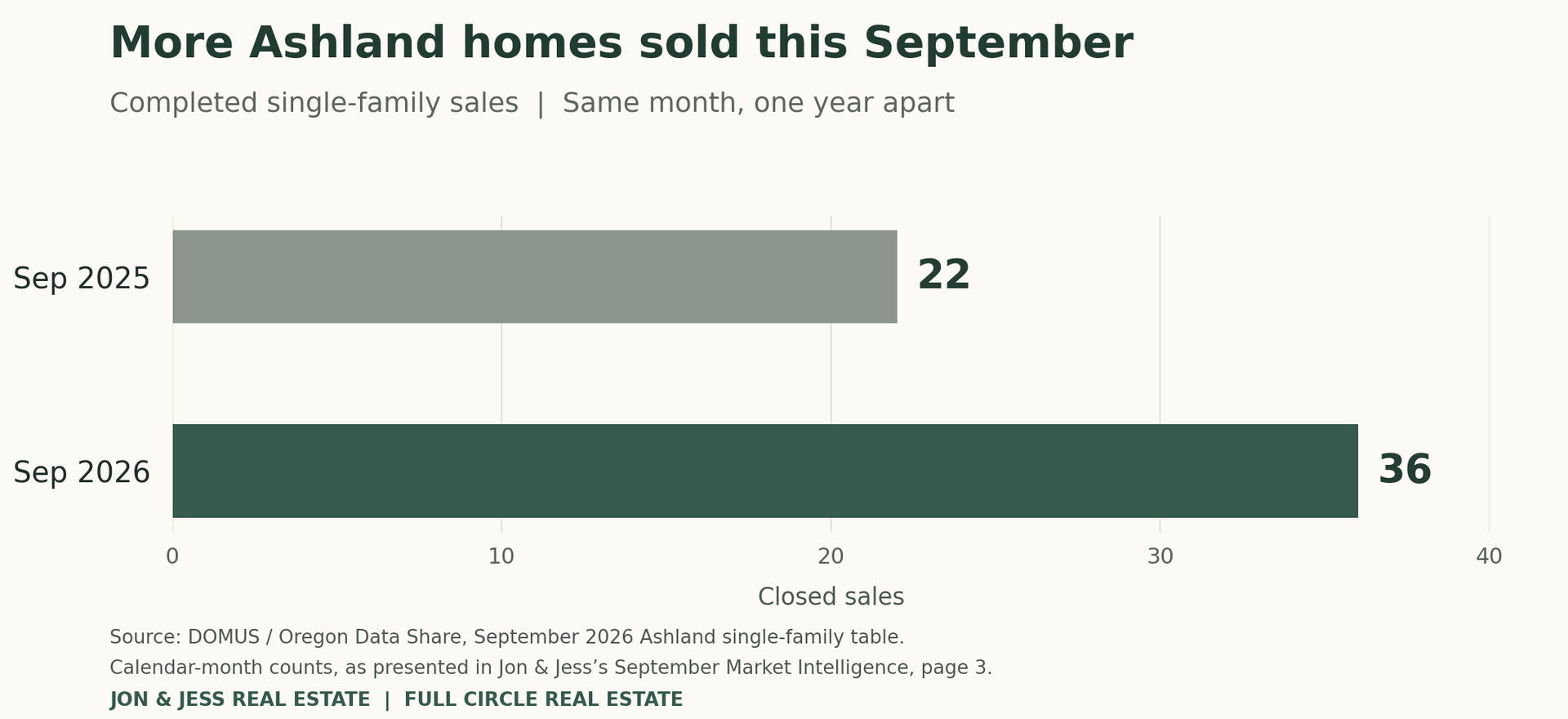
That is an encouraging starting point for a seller. It also leaves important questions unanswered. Citywide activity cannot tell us how much a buyer will pay for your property, which improvements are worth making, or how long your home might take to sell. Those decisions need evidence from homes that actually compete with yours.
Nationally, the National Association of REALTORS® reported 4.8 months of existing-home supply in September, up from 4.5 months a year earlier. That provides context for the wider conversation about buyer choice. It does not replace an Ashland analysis; the national series covers a broader mix of property types. 2
Make the asking price understandable
You know the years of care that have gone into your home. A buyer is seeing it for the first time and comparing it with other ways to spend the same budget. Both perspectives matter, but the asking price has to make sense from the buyer’s side of the front door.
Recent comparable sales help establish what buyers have paid. Current listings show the alternatives they can consider now. We would look at those together, allowing for differences in condition, location, size, and features. A nearby home’s asking price alone does not establish what yours is worth.
Starting higher to leave negotiating room can feel protective. The risk is that a buyer who questions the value may simply move on without starting that negotiation. Before choosing a price, ask: how does our home compare with the others someone could tour this weekend?
Make the unknowns easier to evaluate
A buyer already weighing a large financial commitment may find an unanswered property question especially difficult. An older roof, an unfinished repair, or unclear maintenance history can leave them trying to estimate both the cost and the disruption.
Useful preparation can include organizing service records, documenting completed work, and obtaining professional estimates for issues you are considering addressing. Information should describe the property accurately and help buyers decide what they still need to investigate. It cannot promise that a home will have no future problems.
Presentation matters here, too. Clear photographs, usable rooms, good light, and straightforward access for showings help people understand the home. Before spending heavily on upgrades, we would compare the likely buyer concerns with your budget and the competing listings. Some homes need targeted work; others mainly need careful preparation and a price that reflects their condition.
Use feedback to decide what to change
A quiet stretch can tempt a seller to change everything at once. It is more useful to agree on a review plan before the home goes live, then examine inquiries, showings, feedback, and changes among competing listings.
Few inquiries would prompt us to review exposure, photographs, and price positioning. Showings without offers would lead us to ask what buyers found difficult after seeing the property. Those patterns are clues, not proof of a single cause. The response might involve presentation, a property question, terms, or price.
The aim is to make a deliberate adjustment while there is still time to see how the market responds. Waiting without reviewing the evidence can leave you carrying the same uncertainty as the buyers.
Build the selling plan around your next move
Your own timing belongs in this conversation from the beginning. A seller coordinating another purchase may value a workable closing or possession date. Another may prioritize avoiding repairs after moving out. Comparing an offer means considering the expected net proceeds, contingencies, costs, and timing together.
You do not need to predict the economy or the midterms before beginning that planning. You need a clear view of your alternatives and what a sale would make possible for you.
If selling your Ashland home is on your mind, we can help you review comparable sales, current competition, and the preparation worth considering. From there, we can discuss a pricing approach and timing that fit your goals. You can start with a home analysis before deciding on a listing date.
Your home does not have to resolve every uncertainty a buyer feels about the world. It needs to make sense as their next home.
Sources
- Ashland Market Intelligence September 2026. Pages 2–3. DOMUS / Oregon Data Share calendar-month Single Family Residence data: 36 September 2026 closings versus 22 in September 2025; September 2026 median days on market: 40. These figures are not blended with RVAR’s rolling existing-home series.
- National Association of REALTORS® September 2026 Existing-Home Sales report. Published October 13, 2026. National existing-home supply: 4.8 months versus 4.5 months a year earlier. The series includes existing single-family homes, townhomes, condominiums, and co-ops.